


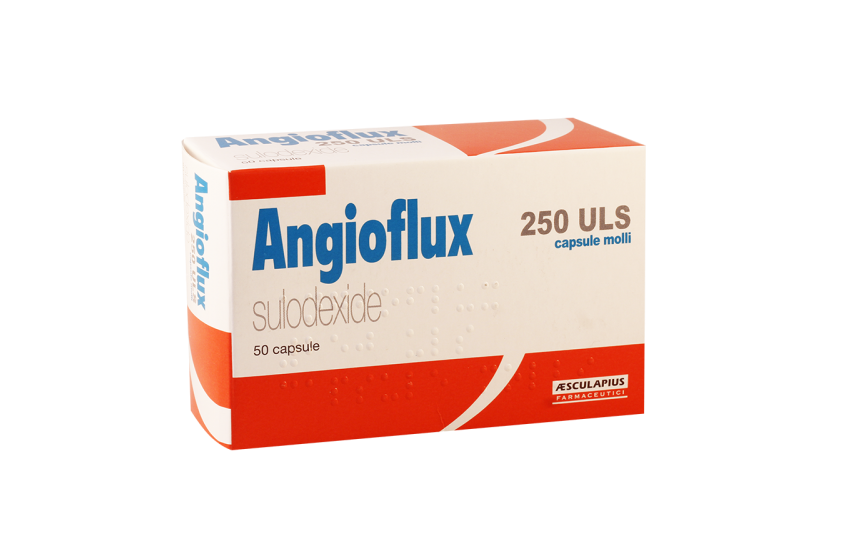
How much does Angioflux cost? - The price depends on the packaging form and dosage. Additionally, the price is determined by the drug's production technology, its unique mechanism of action, and international quality standards.
Angioflux is not a simple, synthetically (chemically) produced medicine. Its active substance, sulodexide, is a natural product derived from animal raw materials. The extraction, purification, and standardization of natural extracts is a much more expensive and labor-intensive process than manufacturing ordinary chemical tablets.
Additionally, Angioflux contains two important components: a heparinoid fraction (80 percent) and dermatan sulfate (20 percent). This combination gives the medicine unique properties: it not only thins the blood (fights blood clots) but also restores the inner wall of the blood vessel itself (endothelium).
There are many simple blood thinners on the market, but there are few such effective alternatives that restore the blood vessel wall. European quality and GMP standards are crucial. Angioflux is manufactured in Italy. European production directly impacts the cost price of the final product.
Angioflux is prescribed for severe and chronic diseases such as diabetic angiopathy (which can lead to leg amputation or blindness in patients) and deep vein thrombosis. Angioflux protects the patient from much more expensive surgical operations and disability.
In patients with diabetes, high blood sugar severely damages capillaries (small blood vessels). Angioflux is the first-line choice for the prevention and treatment of diabetic angiopathies (nephropathy, retinopathy, and diabetic foot) because it purposefully protects the capillary network from damage.
Therefore, when checking the price of Angioflux, we must understand that we are paying not only for symptom relief but for the full rehabilitation of the vascular system. Manufacturing the drug to high technological standards and its biological purity determine its cost, which is ultimately more economical in the long run than treating complicated diseases.
Angioflux is considered the number 1 choice of drug in the treatment of vascular pathologies because it has a complex, four-fold therapeutic action that other standard blood thinners do not possess. It simultaneously treats both the blood and the blood vessels themselves.
Unlike conventional anticoagulants, Angioflux works in four directions:
It restores the inner protective layer of blood vessels (endothelium) and brings back its elasticity.
It inhibits platelet aggregation (sticking together) and prevents the formation of new blood clots.
It helps the body break down already existing microscopic blood clots.
It reduces blood viscosity and lowers bad cholesterol levels.
A buyer who is in the selection phase often faces a choice between capsules and injection ampoules. According to the medical protocol, the most effective approach is the so-called step therapy. This involves starting treatment with injections (usually for 15 to 20 days). During this time, the maximum concentration of the drug is quickly achieved in the blood, which instantly begins to dissolve blood clots, thin the blood, and restore the damaged blood vessel wall. Immediately after completing the injection course, the patient switches to capsules (usually 1 capsule twice a day, for 30 to 40 days). Capsules ensure that a stable, therapeutic level of the active substance is maintained in the blood over the long term, which is essential for the complete rehabilitation of blood vessels and the prevention of new blood clots.
That is why the answer to the question how much will Angioflux cost can vary. The price difference between different forms of Angioflux is logical and is determined by the total amount of the active substance, the complexity of production, and the volume of doses in the package.
In any case, the treatment regimen must be agreed upon with a doctor, as only a professional can determine the degree of damage to your blood vessels and your specific needs.
Angioflux is characterized by a high safety standard, which is particularly important for elderly patients who often take several medications simultaneously. Since sulodexide is a molecule of natural origin, it rarely causes allergic reactions or irritation of the gastrointestinal tract.
Nevertheless, patients taking other anticoagulants (such as warfarin or other types of oral anticoagulants) should exercise caution. In such cases, taking Angioflux should be discussed with a doctor to avoid increasing the risk of bleeding. However, many specialists note that Angioflux, unlike other drugs, is not characterized by a high risk of bleeding, making its use more convenient in outpatient settings.
Why does the price of Angioflux vary across different pharmacies and how do we find the best offer?
The price of Angioflux can vary based on the margins of pharmacy chains, logistical costs, and ongoing discount promotions. It is recommended to use price search platforms, but always give priority to authorized pharmacies to ensure the authenticity of the medication and compliance with storage conditions.
Can Angioflux be taken for varicose veins instead of surgery?
Angioflux is part of conservative treatment. If there is a surgical indication, the medicine cannot replace surgery. However, it is irreplaceable for rehabilitation in the postoperative period and for patients for whom surgery is too early or contraindicated. It improves the quality of life and halts the progression of the disease.
How often should the Angioflux treatment course be repeated?
For chronic diseases such as venous insufficiency or diabetes, the treatment course is usually conducted twice a year. The duration of each course averages from 1 to 3 months. A specialist will determine the interval between courses based on your individual condition and the severity of symptoms.
Should I take it before or after meals?
Angioflux capsules are taken between meals (for example, 1 to 2 hours after eating). This ensures the best absorption of the active substance (sulodexide) into the body.


